


Ever tried to pick a card up off a smooth table, only to struggle to get your fingernail underneath it? Or maybe you’ve cringed as a spilled drink crept dangerously close to your favorite board game. There’s a simple tool used by card players everywhere to solve these common frustrations, and it’s called a playmat. To learn more, check out ufa14k
At its core, a card game playmat is a giant, specialized mousepad designed specifically for playing games. Most are made with a soft fabric top that lets you slide and pick up cards with ease, combined with a grippy, non-slip rubber bottom. This construction ensures the mat stays put on the table while your cards move smoothly on top of it.
The primary job of a playmat is protection. For your cards, the cushioned surface prevents the corner dings, scratches, and grime that can accumulate from playing directly on a hard table. For your table, it provides a barrier against accidental scuffs or spills, creating a dedicated and safe zone for your game night.
Ultimately, many players find that using a mat simply makes the game more enjoyable. Cards glide effortlessly, dealing feels more professional, and the whole setup looks more organized. It’s a small upgrade that enhances the feel of playing, which is why it has become one of the most essential TCG accessories for casual and serious players alike.
Are Gaming Mats Worth It? 4 Key Benefits That Protect Your Games and Table
At first glance, a gaming mat might seem like just a decorative accessory. So, are gaming mats worth it? For anyone who enjoys card games, from a simple round of Uno to more involved strategy games, the answer is a resounding yes. They offer a handful of practical benefits that genuinely improve the experience.
First and foremost, a playmat acts as a suit of armor for your cards. A typical table might look clean, but microscopic debris and unnoticed sticky spots can cause scuffs, wear, and even bends. This is a key part of protecting trading cards and preserving any game you love. Many players also keep their most valuable cards in thin plastic pockets called sleeves, and a soft mat ensures these sleeves don’t get scratched either.
That protection works both ways. A playmat is like a giant coaster for your entire game, safeguarding your furniture from minor damage. An enthusiastic shuffle or a dragged game box can easily leave small scuffs on a wood finish. By laying down a mat, you create a reliable buffer that keeps your coffee table or dining room table looking as good as new.
Beyond just safeguarding your gear, a playmat makes games feel dramatically better to play. The cushioned fabric surface allows cards to be picked up effortlessly, making every action smoother. This small quality-of-life upgrade is one of the top reasons people love this simple card game accessory.
For the security and improved gameplay they provide, mats are an affordable and worthwhile investment. But what gives them their signature smooth-yet-grippy feel? The secret lies in what they’re made of.
What’s a Playmat Made Of? A Simple Guide to Surfaces and Edges
That signature smooth-yet-grippy feel comes from a simple but effective two-part design. Nearly all modern playmats have a soft, polyester cloth top and a non-slip rubber base. The cloth surface is what allows cards to glide and be picked up with ease, while the textured rubber bottom firmly holds the mat in place on your table. If you’ve ever used a quality computer mousepad, you already know exactly how this ideal combination works.
The magic behind that grippy, cushioned base is a material called neoprene. It’s a type of flexible, synthetic rubber—the same durable stuff used to make laptop sleeves and wetsuits. This spongy foundation not only prevents the mat from sliding around but also provides that slight bounce that makes picking up cards so satisfying. Its resilience and smooth top layer make it the standard material for playmats, whether they are plain black or covered in custom art.
While the surface and base are essential, a small detail along the border makes a huge difference in longevity: stitched edges. On basic mats, the cloth top can eventually start to fray or peel away from the neoprene base. A gaming mat with stitched edges, however, has a clean thread sewn around the perimeter that locks the layers together, preventing this wear and tear. This feature dramatically extends the life of a mat, making it an upgrade well worth looking for.
What Size Playmat Do You Need? From Solo Games to Family Feuds
When you start shopping, you’ll quickly notice one size is far more common than any other. The standard for a one-player gaming mat is approximately 24 inches wide by 14 inches tall (about 60×35 cm). This is the ideal size for most trading card games, like Magic: The Gathering or Pokémon, as it gives a single player plenty of room for their cards without taking over the whole table. It’s the perfect personal play area.
Of course, not every game fits into that one-player box. For larger experiences, you can find mats designed for two players, often appearing as long, rectangular “battlefields.” Even bigger gaming mat sizes exist, sometimes large enough to cover an entire small table. These are fantastic for sprawling board games with lots of little pieces or for protecting your furniture during a family game of Uno, ensuring the whole surface is safe and smooth.
To choose the right one, consider what you play most often. If you need a dedicated space for solo card games or want to join in at a local game store, the standard one-player mat is your best bet. However, if you’re looking to upgrade your board game night for the whole family, a larger table-sized mat is a much better investment.
Beyond Plain Black: Choosing a Playmat Design You’ll Love
Once you know the right size for your games, you get to the most exciting part: choosing a design. Much like picking a phone case or a favorite t-shirt, the art on your playmat is a fantastic way to show off your personality. Your choice generally falls into one of three categories, each offering a different experience.
For many, a simple, solid-colored mat is perfect. It’s functional, distraction-free, and makes the colors on your cards pop. On the other end of the spectrum are artistic mats, which turn your play space into a mini art gallery. These can feature anything from stunning fantasy landscapes to beloved characters from movies or games. The difference is purely about style—both the plain and the artistic mat provide the exact same smooth, protective surface for your cards.
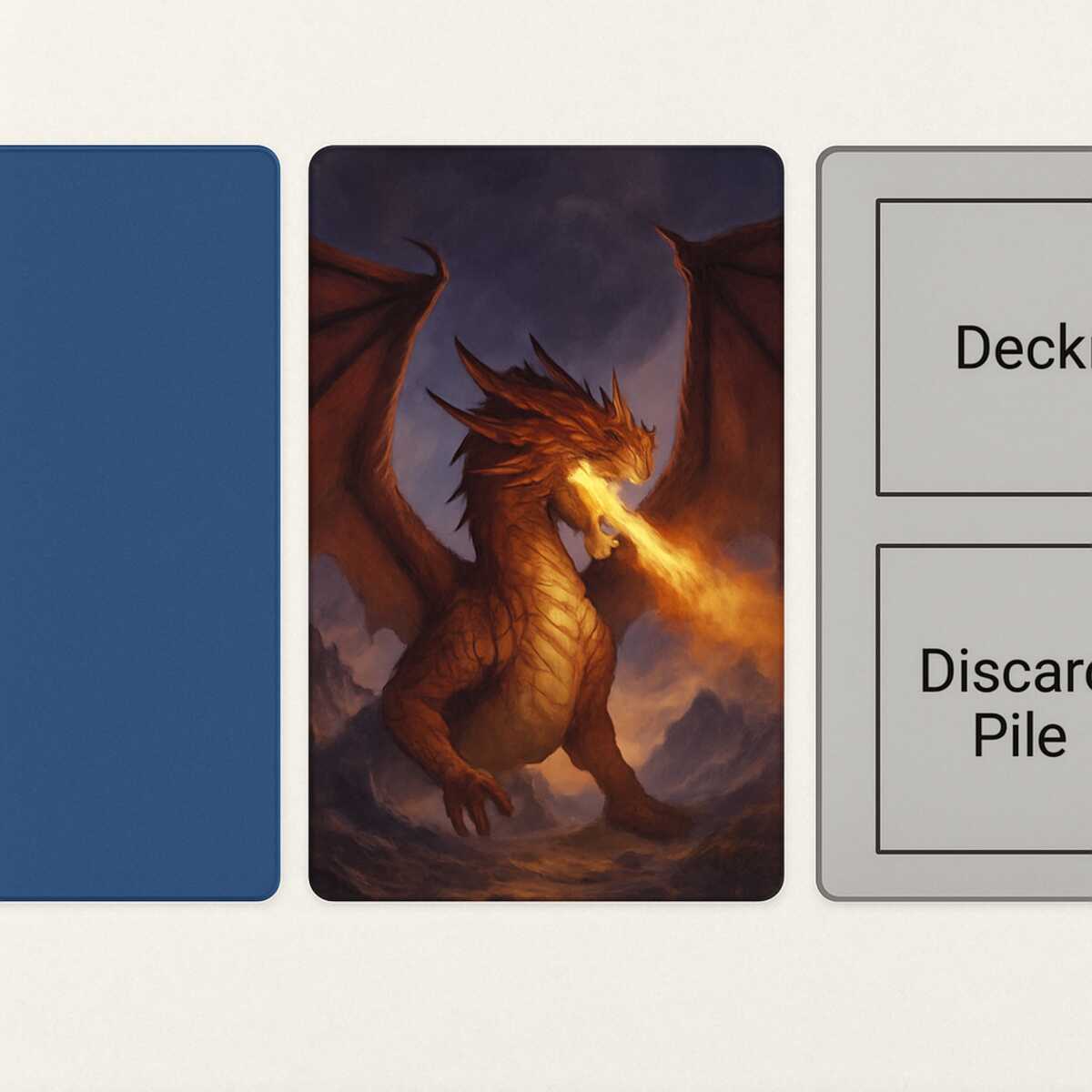
You might also see playmats with printed boxes and text on them. These are often called zoned playmats. The boxes act as a visual guide for specific, complex games, telling players where to put their deck, their used cards, and so on. These are most common for a TCG (Trading Card Game), like Pokémon or Magic: The Gathering, where organization is key. For most family board games or a round of Poker, these zones aren’t necessary.
Ultimately, the right design is the one that makes you happy to bring it to the table. A plain mat is great for pure function, while an artistic one adds a dose of personal flair. If you’re playing a specific TCG, a zoned playmat might be a helpful tool. But what if none of the available options feel quite right? If you have your own great custom mat design ideas, you’ll be happy to know you can create your very own.
How to Get Your Own Art on a Playmat (It’s Easier Than You Think!)
If you’re brimming with custom mat design ideas, creating a one-of-a-kind playmat is surprisingly straightforward. You don’t need any special skills—just a digital image. Many online services allow you to simply upload a high-quality photo, a piece of digital art, or even a scan of a child’s drawing. They handle the rest, turning your vision into a physical mat.
This is made possible through a special process called dye sublimation printing for mats. Instead of just printing ink on top of the fabric where it could crack or peel, this method essentially infuses the dye directly into the fibers of the mat. Think of it like a tattoo for fabric rather than a sticker. This creates a permanent, vibrant image that won’t fade with use. It’s why the soft cloth and rubber combination remains the best material for custom mats—it holds these colorful, detailed images perfectly.
Beyond making one for yourself, a custom playmat is a uniquely personal and thoughtful gift. Imagine giving a board-game-loving friend a mat featuring a photo of your gaming group, or gifting a grandparent a mat with their grandchild’s artwork for their card nights. It transforms a practical accessory into a cherished keepsake.
How to Clean Your Neoprene Mat and Make It Look Brand New
Spills happen, especially during an exciting game night. Fortunately, cleaning your playmat is simple and doesn’t require any special products. Whether it’s a small smudge from snacks or a bigger mess, this gentle method for gaming mat care will protect the fabric, the artwork, and the rubber backing of your mat, keeping it ready for your next game.
For a thorough clean, you only need a soft cloth, some lukewarm water, and a drop of gentle dish soap.
- Spot Clean: For minor spills, first try blotting the area with a damp cloth. This often does the trick.
- Lather Up: For a deeper clean, mix a single drop of soap into a bowl of lukewarm water.
- Scrub Gently: Dip your cloth in the soapy water and gently scrub the mat’s surface in a circular motion. Apply just enough pressure to lift the dirt.
- Rinse and Dry: Rinse the mat thoroughly with cool water until all soap is gone. Finally, hang it to air dry completely, away from direct sunlight.
The most important step in how to clean a neoprene mat is what not to do. Never put your mat in a washing machine or dryer. The intense heat and tumbling action can cause the rubber to warp and the layers to separate, ruining the mat. Sticking to this simple hand-washing method ensures your mat lasts for years.
How to Store Your Playmat (And Clever Tube-Free Alternatives)
Proper storage is a key part of long-term gaming mat care, and it all comes down to one simple rule: always roll your playmat, never fold it. Folding a mat will create permanent, ugly creases that can’t be fixed, but rolling it keeps the surface smooth. For the best results, roll your mat with the colorful artwork facing out. This trains the mat to lie perfectly flat the moment you unroll it for a game, preventing curled edges that get in the way of your cards.
To protect your rolled-up mat, many players use a dedicated playmat storage tube. These are typically simple plastic cylinders with a cap, designed to shield the mat from dust, accidental spills, and getting crushed in a backpack or on a shelf. They’re a great option if you plan on traveling with your mat or want to keep it in mint condition, but they aren’t your only choice.
There are plenty of fantastic playmat storage tube alternatives probably sitting in your house right now. An empty cardboard tube from wrapping paper works perfectly. You can also simply secure the rolled mat with a couple of rubber bands or a Velcro cable tie. The goal is just to keep it from unrolling, and these budget-friendly methods work just as well.
Finding the Perfect Mat for Your Games
A playmat is a key piece of gear that protects your cards, keeps your table clean, and makes every game run smoother. Picking the right one for yourself, your family, or as a thoughtful gift is easy once you know what to look for.
Start by considering who it’s for. If you’re looking to upgrade family board game nights, a larger, simple mat provides plenty of space for everyone. If you’re buying for a friend who loves games like Pokémon, a standard-sized mat with dynamic art is a can’t-miss choice.
Next, consider your style and budget. Do you prefer a minimal, solid color that puts the focus on the cards, or an expressive design that shows off some personality? A basic, effective mat is very affordable, so prioritize a good non-slip rubber bottom first. If your budget has room, adding stitched edges is a great durability upgrade that prevents fraying over time.
The next time you sit down to play, it won’t just be on a table—it will be in a space you’ve intentionally created for fun, competition, and connection.
